
Myles and Dayna reflect on what they shared and learnt at last week’s Future Food Symposium at the University of Birmingham

The Future Food Symposium 2025, hosted by the University of Birmingham, brought together academics, advocates, and practitioners working at the intersection of food, education, and policy. Across two days of panels and presentations, the symposium tackled themes as diverse as cultured meat and community food partnerships, sustainable procurement and food literacy, agroecological transitions and food fraud, education and equity. What united them all was a shared commitment to building more sustainable, just, and inclusive food futures, with children and communities often at the heart of the conversation.
It was in this context that Myles Bremner and Dayna Brackley led their session, ‘The child nutrition policy rollercoaster: navigating inconsistency at every stage’. They explored the fragmented policies that shape children’s access to nutritious food across the critical first 8,000 days of life.
Drawing on examples from early years, school, and higher education, they examined how well-intentioned policies often fail to translate into equitable provision.
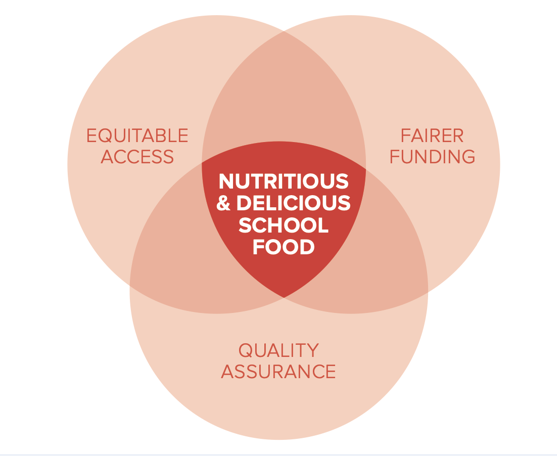
They used the lens of access, quality, and funding – three elements that together form a ‘Virtuous Venn’ that underpins truly nutritious, delicious school food – to highlight where the system falls short, and where opportunities for alignment and improvement exist. From breastfeeding support to free early years meals, and school food funding to food standards at university, Myles and Dayna showed how policy inconsistency across life stages creates avoidable barriers to essential nutrition.
From early years to higher education: gaps at every stage
Myles and Dayna illustrated how a complex and inconsistent mix of policies has created a postcode lottery for free school meal access across the UK. While some regions, like London, have extended universal provision to all primary school children, others rely solely on means-testing, leaving many families who sit above the household-income threshold – less than £7,400 per year after tax and before benefits – unable to access support.
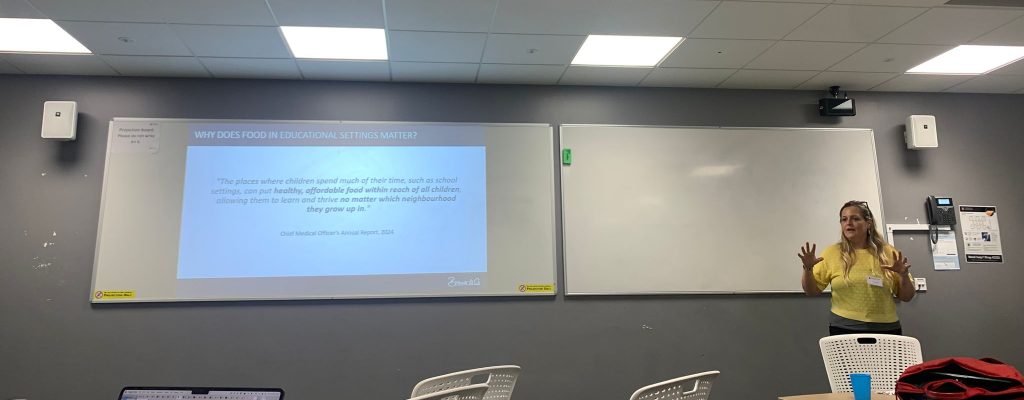
They drew attention to the absence of any formal quality assurance in tertiary education, and the lack of consistent standards across all education stages. Even where school food standards exist, their adherence and enforcement are limited, and there’s little oversight to ensure that children are receiving meals that are nutritious, appealing, and appropriate.
They also explored disparities in funding. Funding levels vary not only by region, but also by setting and age group, creating significant inequalities. For example, meal funding for early years settings is often absent or insufficient, even though these settings serve children at critical stages of development. Meanwhile, local authorities are left to navigate growing demand with constrained budgets, placing further strain on already fragile systems.
The result is a fragmented policy environment where entitlement does not always translate into access, and where quality and funding fall short of supporting children to thrive.
Highlights from the Symposium: food literacy, commensality, and joy
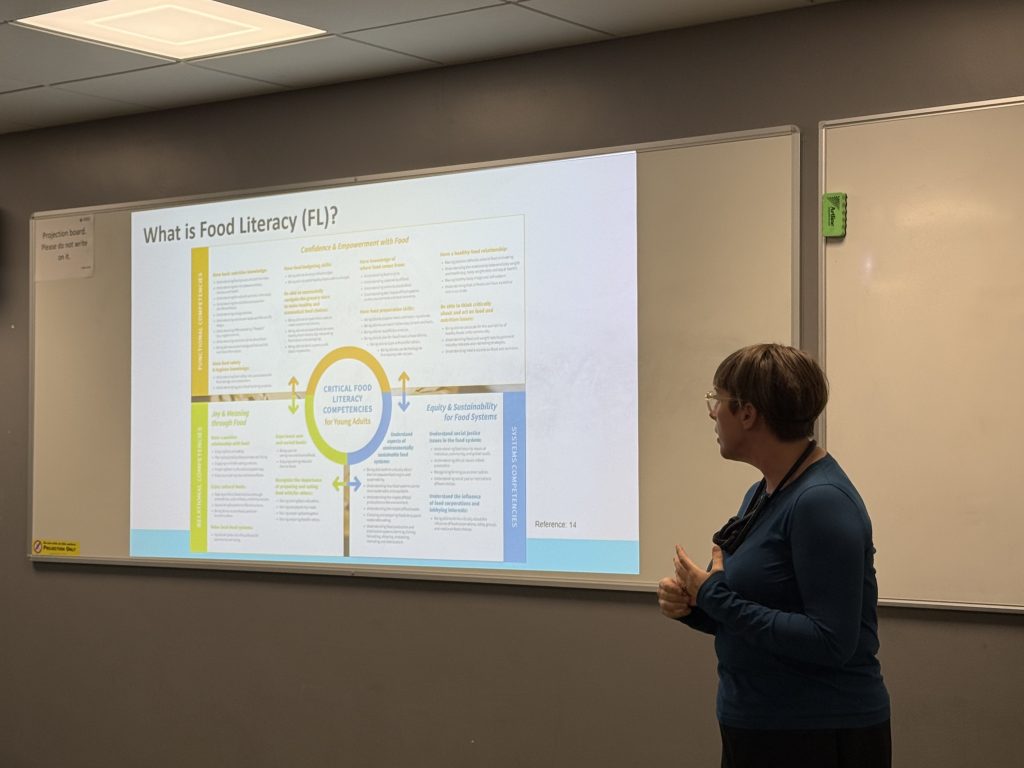
Kim Smith shared insights from her PhD on food literacy, highlighting how national curriculums rarely address food in a holistic way. Young people are asking for fit-for-purpose food education, but progressive and practical food skills (as well as issues like sustainability, culture, and equity) are often left out.
Fran Box, from TastEd, reminded us how much discovery and play matter in food education. Her ‘black sock and pear’ game made that clear in the most memorable way. Fran also discussed how food education is often focused only on food consumption, rather than including food provision.
Jessica Tanner and colleagues offered powerful reflections from special schools and AP settings, where sensory needs, hunger, and inadequate dining spaces often undermine healthy eating goals. Their flexible, child-centred toolbox of research methods (draw-write, story stems, go-alongs, etc) shows what inclusive, responsive research can look like in action.
Stephanie Slater gave an inspiring overview of School Food Matters‘ new strategy, emphasising the role of local partnerships and whole-system collaboration.
Emma Surman and Sheena Leek explored commensality in the transition to university – what happens when young people leave home and move into unfamiliar environments, suddenly responsible for feeding themselves? Their research, using photo elicitation to prompt reflection, uncovered practical challenges and social barriers that prevent students from eating together, from cold kitchens and limited storage to unclear rules and fears about borrowing or losing equipment. Despite this, the desire for shared meals, connection, and belonging came through clearly. It is a powerful reminder that food education, and food policy, must extend beyond the classroom to consider how food shapes wellbeing, belonging, and social connection across all stages of life.
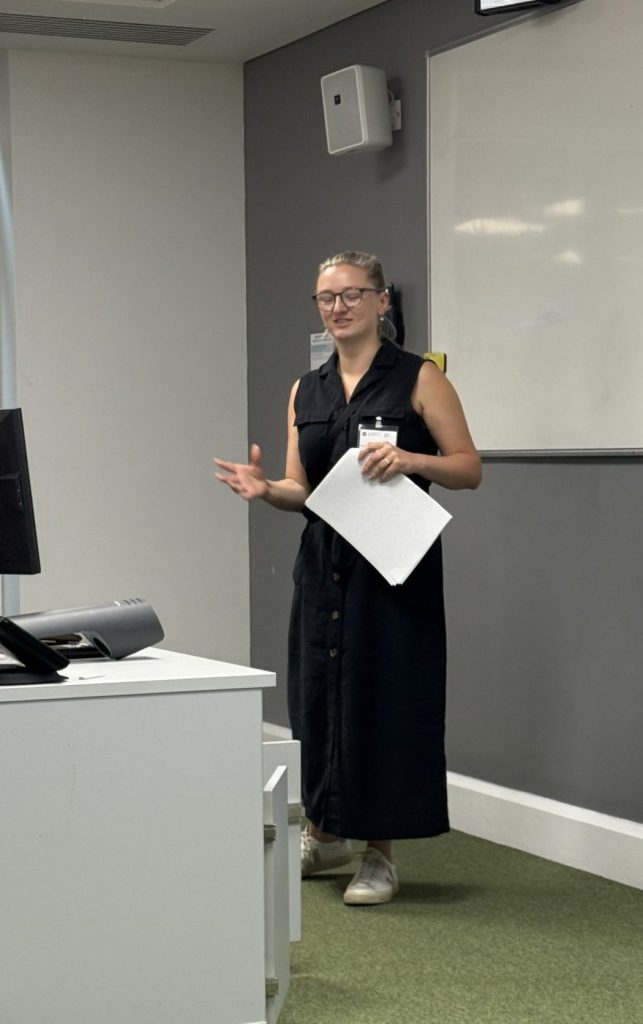
And a huge shoutout to Lauren Rathbone from the School of Artisan Food, whose Best Food Forward programme puts food literacy and joy at the centre. A brilliant, curriculum-aligned model that shows what’s possible when we prioritise confidence, care, and commensality in food learning.
Where we go from here
The issues explored are the result of siloed policymaking, short-term mindsets, and undervaluing the role of food in children’s development. But they are also addressable.
We believe a more coordinated, child-centred approach is possible, one that is grounded in equity, driven by evidence, and shaped by the realities of children’s everyday lives. Myles and Dayna left the symposium energised by the work of others, more determined than ever to keep pushing for the policies and partnerships that can turn a fractured food system into one that helps all children thrive.
____________________________________________________________________
If you’d like to hear more about our presentation, data sources, or collaborative work on child nutrition policy, feel free to get in touch.