
At Bremner & Co, we’ve really enjoyed working with our partners, Basis, over the past several years to support local authorities to tackle one of the most persistent challenges in the free school meals (FSM) system: that thousands of children are entitled to this support but are not registered to receive it.
Together, we have worked with councils, including Tower Hamlets, Southwark, Bexley, Devon, Torbay, Gloucestershire and Oxfordshire, to design and implement opt-out auto-enrolment approaches that identify entitled children and remove barriers to registration.
It has been a brilliant partnership. Basis bring an agile, problem-solving approach to delivery, working closely with council teams to navigate the details of implementation. Bremner & Co bring a policy lens, close connections with political stakeholders and a deep understanding of the wider policy and advocacy landscape around school food and child poverty. Through our connection with a network of more than 100 councils, we help authorities quickly find answers and unblock issues, drawing on experience and insight from across the country. Working together as a team, we have helped councils turn policy ambition into practical delivery.
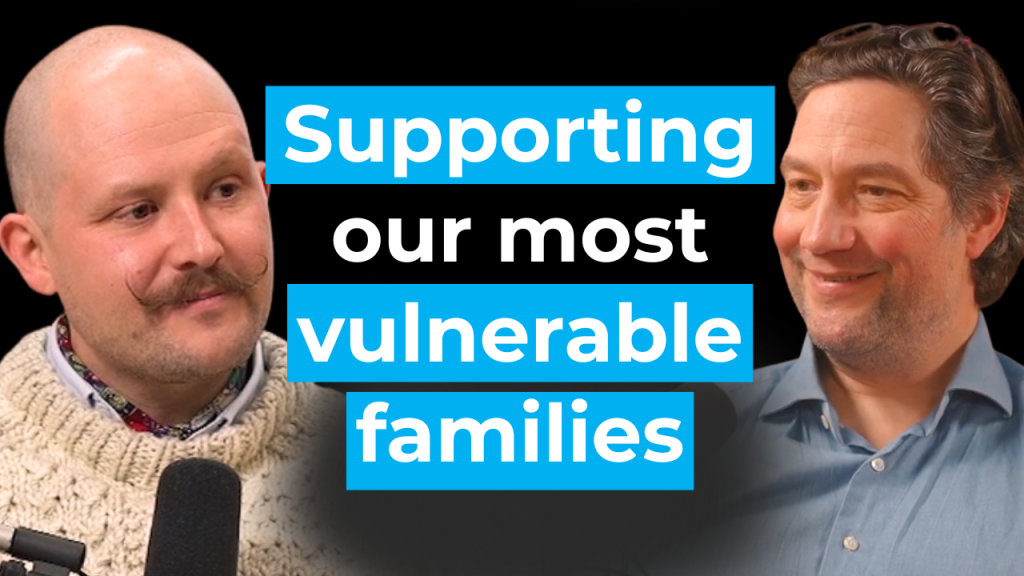
Myles is a guest on the Basis podcast
Myles was invited to join Joe Badman (Basis) on the Basis podcast to discuss how, through this partnership, Basis and Bremner & Co are supporting councils to tackle the ‘hidden cohort’ of children entitled to free school meals but not registered to receive them.
Results from this work show the impact can be significant. Across six local authorities that Basis and Bremner & Co have partnered with, more than 4,000 children were identified at the first pass of data matching. This has unlocked around £12 million in annual funding flowing into communities from disadvantaged backgrounds, including approximately £4.6 million in pupil premium funding for schools. For every child identified, that funding continues for the next six years of their education.
In the podcast, Myles and Joe explore:
- Why entitled families don’t register – including stigma, complex administrative processes, language barriers, and the unintended consequence of universal infant free school meals reducing the perceived need to register.
- How we support councils to navigate legal and data protection questions – where councils often get stuck and how local data officers are cutting through red tape to unlock funding
- How councils can prepare for upcoming policy changes – what the extended FSM eligibility and end to transitional protections mean for councils and how auto-enrolment can help prevent entitled children from slipping through the net
- How data can be a force for good – by delivering vital community insight and enabling councils better support disadvantaged families.
- Why partnership matters – how collaboration between councils, schools and delivery partners helps turn policy ambition into practical delivery, resulting in learnings, insight and improved ways of working in the council.
Why now?
From September, the government is expanding free school meal eligibility to all children in households receiving Universal Credit. Whilst this is a welcome change, it introduces significant complexity. A large cohort of children currently on transitional protections will need to be de-registered from the existing benefits-related scheme and re-registered under the new one. At the same time, newly entitled children need to be identified and registered before they miss out.
Councils are using auto-enrolment to address both challenges, ensuring every child is identified, placed on the correct scheme and registered in time. As Myles puts it:
“We know the project can be delivered in around three months, but we urge and hope that councils understand that now is a brilliant opportunity to really understand how to get things ready, to take maximum advantage of this brilliant free school mail policy.”
Let’s keep the conversation going.
How is your team preparing for the changes this September? If you’re unsure how this might impact your local data or your funding, we’d love to help. Contact [email protected].