
October’s events offered a mix of big picture thinking and focused discussion on specific food system challenges, tools and opportunities. The team spent time with leaders debating what real transformation in the food system looks like, discussed the interconnectedness of women’s poverty and children’s poverty, and took time to reflect as a team on where Bremner & Co is heading next. Again and again, we were reminded that the strongest ideas are the ones shaped by the voices of those with lived experience and are built to work in practice.
Food System Transformation: Trust and Transparency – the October Expert Event
2nd October
Future Food Movement
Myles joined nearly 100 leaders from across the food sector for Future Food Movement’s October event, which explored the role of customer and consumer trust in brands. The conversation ranged widely across brand behaviour, consumer expectations and the duty on companies to demonstrate integrity rather than perform it.
What stayed with Myles was that whilst everyone agreed trust matters, it was hard to shake the sense that many of the biggest brands still struggle to genuinely listen to their customers, let alone act on what they hear when it challenges profit. The session offered a reminder that some aspects of the food system talk confidently about trust while often avoiding the harder choices it demands.

Bremner & Co’s Team Away Day
7th October
Online
Our October away day, hosted by LEYF in Westminster, was a chance to pause and take stock after a challenging and exciting year in food policy. It was energising, and a helpful reminder of the importance and value of stepping away from the day to day. What carried throughout was the team’s appetite to build something that feels uniquely Bremner & Co – true to our values and the motivations and objectives each member of the team brings to the table.
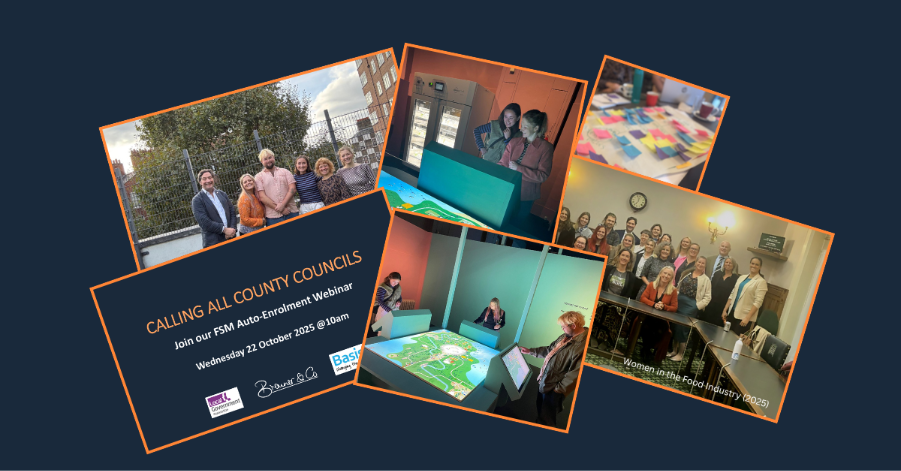
We ended the afternoon wandering through the Science Museum’s Future of Food exhibition, looking at cell-grown meat, resilient crops and the messy tangle of innovation that sits between today and tomorrow. It was a fitting way to close: surrounded by big questions, and reminded that creativity, curiosity and a strong team culture remain our best tools.

Parliamentary Roundtable: Food, Farming & Sustainability in the National Curriculum
13th October
Soil-ED, House of Commons
Myles was invited to the House of Commons as part of a small group of food education specialists to brief MPs, including the Shadow DEFRA Minister, alongside leaders from farming, education and civil society. The discussion centred around a simple point: food education is fundamental to children’s wellbeing and long-term health, yet it often drifts to the margins of wider policy debates. Contributors around the table were clear about the opportunity to change that.
The room shared a strong appetite for a more coherent approach that gives children a real understanding of where food comes from and why it matters. It was an informative conversation and one that pointed to a growing cross-party recognition that food, farming and sustainability need a much stronger place in the curriculum if we want children to thrive.

Women’s Resilience, Thriving Children
21st October
Smallwood Trust
Rosie was grateful to join this Learning Circle which spotlighted mothers’ experiences of challenges related to insecure work, inequitable support systems and care responsibilities – and highlighted the need for anti-poverty strategies that take the gendered nature of child poverty into account. The insightful, open discussions made it clear you can’t separate a child’s nutrition from the financial and emotional realities their mother is navigating.
In the group discussions, Rosie found herself reflecting on how important it is that research and advocacy in children’s food policy considers the gendered structures that create the conditions for poor nutrition in the first place, as well as addressing downstream solutions. Conversations on domestic abuse, the two-child limit, disability and immigration status showed how these pressures land on women long before they manifest as food insecurity for a child. Cross-sector conversations with funders, advocates and frontline workers created a safe space to explore how shared solutions might be formed, and the case for policy change be amplified.
Auto-enrolment webinar for two-tier councils
22nd October
Bremner & Co, Basis, and the Local Government Association
Myles and Cressida led a webinar, in collaboration with the LGA and Basis, designed for two-tier councils preparing for the 2026 census changes. The over 60 local authority attendees were keen to understand the mechanics of FSM auto enrolment in a policy environment where responsibilities and data sit across different functions and teams, and their focused questioning enabled valuable discussion.
Devon’s case study landed especially well. As the first two-tier area to implement auto-enrolment, they shared impressive results: 1,079 eligible children identified, a 99% retention rate, and almost £1.5 million redirected to schools and families. They also spoke openly about what made it work; tighter cross-departmental relationships, new data access, and establishing a new process that is now business as usual. FixOurFood added helpful system insight, grounding Devon’s experience in the wider policy landscape. It made for a lively, practical session that gave councils real evidence and lessons from the front line, helping to build confidence that auto-enrolment is deliverable even in the most complex local structures.

Using co-production for transformative food policy
22nd October
Transforming UK Food Systems (TUKFS)
Rosie participated in a TUKFS workshop on co production that brought together academics, consultants, local authorities and central government. The TUKFS team welcomed honest discussion about the need to balance doing co-production well, and navigating and the pace at which working in policy often moves. That set the tone for a session focused on approaches that participants could feasibly incorporate into their policy work.
Rosie found the conversation especially useful for clarifying how co-production tools can be made more accessible and usable. The group discussed how detailed frameworks could be translated into succinct prompts and templates that can be picked up and implemented within tight timelines. The workshop created a reflective space to think about how evidence, practice and policy can be linked more deliberately. It reinforced a growing theme across food systems work: co production is most powerful when it stays practical, realistic and close to the people it intends to serve.

Plenty to take from this month! We look forward to more events through the rest of the year.